













How to Stop Running Out of Money Before Your Next Payday
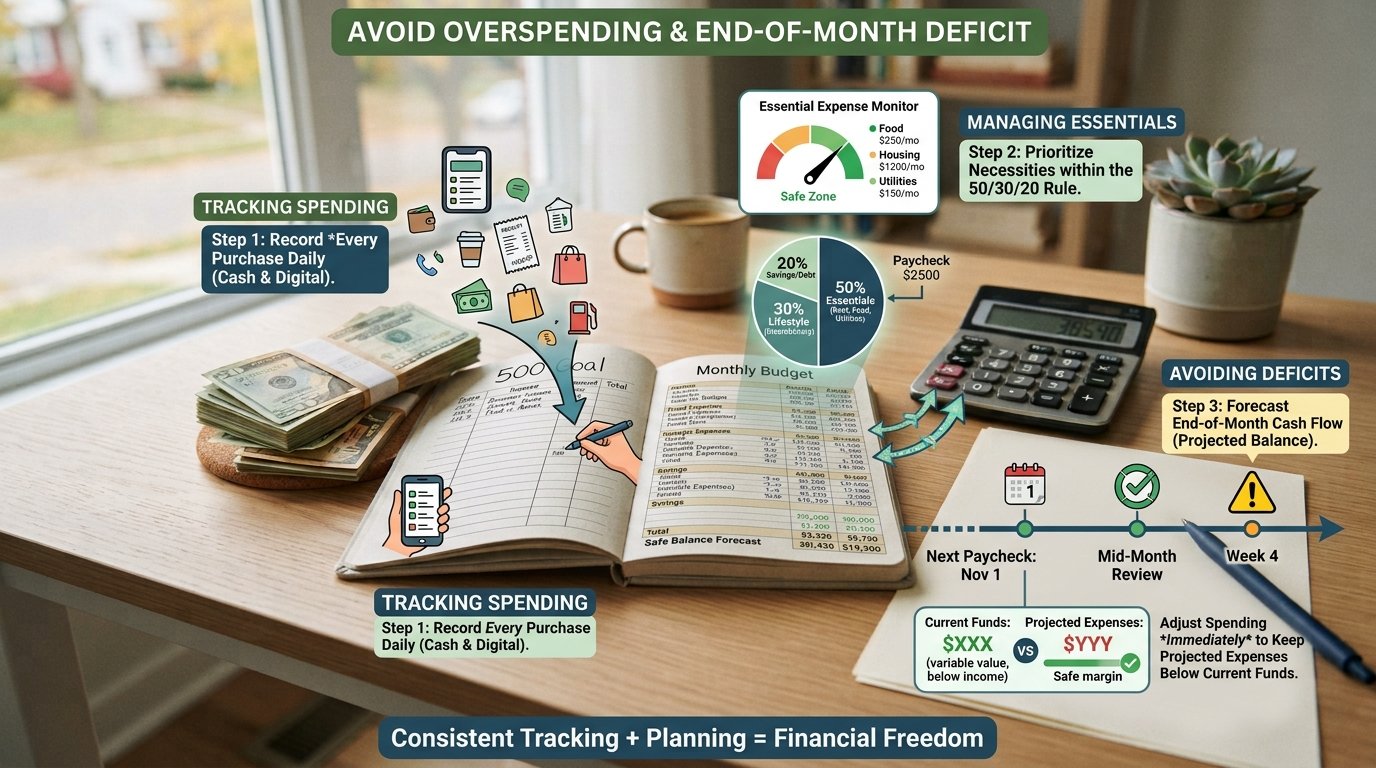
Have you ever received your salary, paid a few bills, bought groceries, handled transportation, and suddenly realised that most of your money is gone before the month is halfway over? If this sounds familiar, you are not alone.
Many people struggle to make their income last until their next payday. Even people with steady jobs can find themselves borrowing money, using credit cards, or depending on friends and family to cover basic expenses before their next salary arrives.
The problem is not always that you earn too little. Sometimes, it comes down to poor spending habits, unexpected expenses, expensive debt payments, or a budget that does not reflect your actual needs.
Learning how to make money last until payday can help you reduce financial stress, avoid unnecessary borrowing, and gain better control over your finances.
The good news is that you do not necessarily need a higher salary to start making improvements. With a practical spending plan, a few adjustments to your daily habits, and a clear understanding of where your money goes, you can begin managing your income more effectively.
1. Find Out Where Your Money Is Going
Before you can stop running out of money, you need to understand why it keeps happening.
Many people know how much they earn every month but cannot explain exactly where their money goes. Small purchases, frequent food deliveries, subscriptions, impulse buying, and unplanned transfers can gradually consume a significant portion of their income.
Start reviewing your bank statements, payment records, and cash spending for the previous 30 days.
Divide your spending into categories such as:
- Rent and housing expenses
- Groceries and household supplies
- Transportation and fuel
- Electricity, water, internet, and phone bills
- Debt repayments
- Family support and personal obligations
- Entertainment and eating out
- Shopping and miscellaneous expenses
Add up the amount spent in each category.
For example, you might discover that you spend $180 monthly on eating out, $90 on unused subscriptions, and another $120 on impulse purchases.
Identifying these expenses gives you an opportunity to make adjustments before your next payday.
You do not have to eliminate every enjoyable expense. The goal is to understand which expenses are necessary, which provide genuine value, and which can be reduced.
2. Divide Your Salary According to the Number of Days Until Payday
One of the simplest ways to make your money last longer is to stop treating your entire salary as money available for immediate spending.
Instead, calculate how much you can afford to spend each day or week after setting aside money for essential bills.
Suppose you receive $2,000 monthly and have $1,400 remaining after paying your fixed bills and setting aside money for other essential obligations.
If you have 28 days until your next payday, your available spending amount is approximately $50 per day.
However, spending exactly $50 every day may not be practical because some days involve higher expenses than others.
A weekly spending allowance can be easier to manage.
For example:
| Period | Spending allowance |
|---|---|
| Week 1 | $300 |
| Week 2 | $300 |
| Week 3 | $300 |
| Week 4 | $300 |
| Total | $1,200 |
This example leaves $200 unallocated from the original $1,400 for unexpected expenses or additional savings.
The figures are illustrative. Your actual allowance should reflect your essential expenses, income, and payday schedule.
Once you establish your limit, resist the temptation to spend next week’s money during the current week.
3. Pay Your Essential Bills First
When your salary arrives, it is tempting to focus on the money in your account rather than the expenses that money must cover.
This can create a false sense of financial security.
A bank balance of $2,000 does not mean you have $2,000 available for shopping if rent, utilities, debt repayments, and groceries still need to be paid.
Prioritise your expenses in the following order:
- Essential housing costs, utilities, and food.
- Transportation and other costs required to get to work or earn an income.
- Minimum required debt payments and other urgent obligations.
- Necessary family and personal expenses.
- Savings and nonessential spending, according to what your budget can realistically support.
Some expenses have strict deadlines, while others are more flexible. Adjust your priorities to avoid losing essential services, incurring serious penalties, or putting your housing or employment at risk.
If your income cannot cover all your essential expenses, do not assume that cutting out coffee or entertainment will solve the problem. You may need to negotiate payment dates, seek assistance, reduce larger costs, or explore ways to increase your income.
4. Stop Spending Based on Your Bank Balance
A common financial mistake is assuming that having money in your account means you can afford to spend it.
Imagine that you have $800 remaining after payday. You see an attractive pair of shoes for $100 and decide to buy them.
A few days later, you spend another $80 on a restaurant meal, $60 on entertainment, and $40 on miscellaneous purchases.
Although each transaction seemed affordable on its own, the combined spending has reduced your balance $280.
The problem becomes more serious when you remember that groceries, transportation, and other bills still need to be covered.
Instead of asking, “Can I afford this right now?” ask yourself, “Can I afford this after accounting for everything I must pay before payday?”
That simple question can prevent many unnecessary purchases.
Consider keeping a separate account or savings pocket for bills, where appropriate, so you are less likely to spend money that has already been committed.
5. Plan Your Groceries Before Going Shopping
Food is one of the most important household expenses, and unplanned grocery shopping can quickly damage your budget.
Shopping without a list often leads to buying duplicate ingredients, snacks you do not need, and expensive convenience foods.
To reduce grocery spending:
- Plan meals for the coming week.
- Check your cupboards and refrigerator before shopping.
- Prepare a shopping list based on those meals.
- Compare prices and unit costs between brands.
- Buy commonly used ingredients in quantities that make financial sense.
- Prepare meals at home when it is cheaper and practical.
- Freeze suitable leftovers instead of allowing food to go to waste.
For example, rather than buying ingredients for seven unrelated meals, plan meals that share ingredients. Rice, beans, vegetables, eggs, and other affordable staples can often be used in several different dishes.
Avoid buying large quantities merely because an item is discounted. A bulk purchase is only a saving if you can use the product before it expires and the upfront cost fits your budget.
6. Reduce Impulse Purchases
Impulse purchases can make it difficult to make money last until payday because they are rarely included in your spending plan.
You might intend to buy only one item online but end up purchasing several products after seeing a promotion.
To control this habit, introduce a waiting period before making nonessential purchases.
For inexpensive items, wait at least 24 hours. For larger purchases, consider waiting several days or a week.
During that time, ask yourself:
- Do I genuinely need this item?
- Did I plan to buy it before seeing the promotion?
- Will buying it affect my ability to pay essential expenses?
- Can I find a less expensive alternative?
- Would I still want it if it were not discounted?
You can also unsubscribe from promotional emails, disable shopping notifications, and remove saved payment details from shopping apps if they encourage unnecessary spending.
These small barriers can make impulsive spending less convenient and help you think more carefully before spending.
7. Review Your Subscriptions and Recurring Payments
Recurring payments are easy to overlook because they may seem small individually.
A $12 streaming subscription, a $15 software subscription, and a $10 membership may not appear expensive. However, several recurring charges can add up to a meaningful monthly expense.
Review your bank statements for automatic payments, including:
- Streaming platforms
- Music subscriptions
- Gym memberships
- Gaming services
- Cloud storage
- Premium mobile applications
- Delivery memberships
- Software you no longer use
Cancel services that you rarely use or no longer need.
For subscriptions you want to keep, check whether a cheaper plan is available or whether you can share an eligible family plan in accordance with the provider’s rules.
Do not cancel an essential service simply to save a few dollars if doing so would create a greater expense later. Focus on charges that offer little value relative to their cost.
8. Avoid Borrowing to Cover Every Payday Shortfall
When money runs out before payday, borrowing may seem like the quickest solution.
You might use a credit card, take a payday loan, request an advance from your employer, or borrow from friends and family.
Although borrowing can sometimes help during a genuine emergency, depending on it every month can create a cycle that becomes difficult to escape.
For example, if you borrow $200 during the last week of the month, your next salary must cover your normal expenses and the repayment. If interest or fees apply, even less money remains available.
This can leave you short again before the following payday.
Before borrowing, consider whether you can:
- Reduce a nonessential expense.
- Ask a service provider about a payment extension or instalment arrangement.
- Negotiate a change to your bill’s due date.
- Access legitimate emergency assistance.
- Sell an unused item without disrupting your ability to work.
- Earn additional income through a realistic short-term opportunity.
If borrowing is unavoidable, understand the total repayment amount, fees, due date, and consequences of missing payments before agreeing.
Repeatedly borrowing to cover ordinary living expenses is a sign that your current budget may not be sustainable. The solution may require larger changes to expenses, income, or debt obligations rather than another loan.
9. Build a Small Emergency Fund
Unexpected expenses are one of the main reasons people run out of money before payday.
A car repair, medical expense, urgent home repair, or family emergency can disrupt even a carefully planned budget.
An emergency fund helps you handle these expenses without immediately turning to credit.
You do not need to save thousands of dollars at once.
Start with an amount that is realistic for your circumstances. Your first target might be $100, followed $250, $500, and eventually enough to cover several months of essential expenses as your finances allow.
If you can save $10 per week, you will accumulate $520 over a year, excluding interest.
If $10 per week is currently impossible because your income barely covers necessities, focus first on covering essentials and identifying ways to improve your cash flow. Saving should not come at the cost of food, housing, necessary medication, or other critical needs.
Keep emergency money separate from everyday spending, preferably somewhere accessible when a genuine emergency occurs.
10. Use a Weekly Budget Instead of a Monthly Budget Alone
A monthly budget can look reasonable on paper but still fail in practice.
For example, you may allocate $400 for groceries and transportation combined, but spend $250 during the first week. You then have only $150 left for the remaining weeks.
A weekly budget makes it easier to notice problems early.
At the beginning of each week, determine how much money is available after accounting for upcoming bills and essential expenses.
You can then assign amounts to categories such as:
- Groceries
- Transportation
- Personal spending
- Household needs
- Family obligations
- Miscellaneous expenses
Review your spending at the end of the week.
If you overspend in one category, decide how to adjust the remaining budget rather than ignoring the difference.
A weekly review also allows you to identify patterns. If transportation consistently costs more than expected, update your budget rather than repeatedly hoping to spend less next week.
The objective is to create a spending plan that reflects your real life, not an unrealistic plan that you abandon after a few days.
11. Find Ways to Reduce Your Biggest Expenses
Small savings matter, but larger recurring expenses can have an even greater effect on your ability to make money last.
Review the costs that consume the biggest portion of your income.
Depending on your circumstances, these might include housing, transportation, debt repayments, childcare, insurance, or utility bills.
Consider whether you can:
- Find a cheaper phone or internet plan.
- Reduce fuel costs through more efficient travel arrangements.
- Negotiate certain service charges.
- Refinance eligible debt if the total cost would genuinely be lower.
- Adjust housing arrangements when practical and safe.
- Avoid unnecessary vehicle expenses.
- Review insurance coverage without leaving yourself exposed to serious risks.
For example, saving $60 each month on a recurring bill creates $720 in annual savings.
Before making a change, consider any switching fees, penalties, lost benefits, or additional costs. A cheaper option is not always cheaper overall.
12. Look for Realistic Ways to Increase Your Income
Budgeting can help you manage the money you have, but it cannot solve every financial problem.
If your essential expenses consistently exceed your take-home pay, you may need to increase your income as well as reduce spending.
Depending on your skills, location, schedule, and available resources, potential options include:
- Taking on occasional overtime when available.
- Offering virtual assistant services.
- Providing writing, editing, or administrative support.
- Tutoring students in a subject you understand.
- Selling products or services you can deliver profitably.
- Taking on legitimate temporary or part-time work.
- Offering a useful local service.
Choose opportunities based on your skills and the time you can realistically commit. Be cautious of jobs that require upfront payments, promise guaranteed high earnings, or ask you to recruit others before you can get paid.
If you already work long hours, do not assume that adding another job is the only solution. A more sustainable arrangement, lower fixed costs, or assistance with essential expenses may be more appropriate.
Any additional income should have a purpose. Decide in advance how much will go toward essential expenses, overdue obligations, emergency savings, and other priorities.
13. Create a Plan for the Final Week Before Payday
The final week before payday is often when financial pressure becomes most noticeable.
Instead of waiting until your balance is almost zero, create a specific plan for those final days.
Seven days before payday, check:
- How much money remains in your account?
- Which essential expenses still need to be paid?
- How much food do you already have at home?
- What transportation costs are unavoidable?
- Are there any automatic payments scheduled before payday?
- What spending can safely be postponed?
Use the answers to calculate the money genuinely available for the rest of the week.
If you have $140 available for seven days after accounting for outstanding bills, your average spending limit is $20 per day. That does not mean you must spend exactly $20 daily; you may need to reserve more for transportation or food on particular days.
If you realise that your money will not cover essential needs, act early. Contact relevant service providers, explore available support, and avoid waiting until a payment is overdue before seeking help.
Most importantly, do not take on expensive debt simply to maintain your usual discretionary spending.
14. Stop Treating Every Salary Increase as Extra Spending Money
Receiving a pay rise, bonus, or additional payment can improve your financial situation, but only if you use it deliberately.
If every increase in income is immediately absorbed more expensive purchases, you may continue running out of money regardless of how much you earn.
When your income increases, consider directing part of the additional amount toward:
- Building an emergency fund.
- Paying down expensive debt.
- Covering previously unaffordable essential expenses.
- Preparing for irregular annual bills.
- Saving toward an important financial goal.
You can still improve your lifestyle as your income grows. The important thing is to make those decisions intentionally rather than automatically increasing every expense.
15. Prepare for Irregular Expenses Before They Arrive
Some expenses occur only a few times each year, so they are easy to forget when preparing a monthly budget.
Examples include annual insurance premiums, vehicle maintenance, school expenses, holiday travel, property repairs, and yearly subscription renewals.
When these bills arrive unexpectedly, they can consume the money you intended to use until payday.
List the larger expenses you expect during the next 12 months and estimate their cost.
Then divide each expected cost the number of months remaining before it is due.
For example, if you expect to pay $600 for a bill in six months, setting aside $100 per month would help you prepare for it.
This approach turns a large future payment into smaller planned contributions.
If your current income does not allow you to save the full amount, set aside what you can and look for ways to reduce the remaining shortfall.
A Simple Example of How to Make Money Last Until Payday
Consider someone who earns $2,500 per month after taxes.
They frequently run out of money during the final week because they spend too much early in the month and underestimate irregular expenses.
After reviewing their finances, they create the following illustrative monthly plan:
| Expense category | Monthly amount |
|---|---|
| Rent and utilities | $900 |
| Groceries | $350 |
| Transportation | $200 |
| Debt repayments | $250 |
| Phone and internet | $80 |
| Family and personal obligations | $250 |
| Emergency savings | $100 |
| Irregular-expense fund | $100 |
| Flexible spending | $270 |
| Total | $2,500 |
This plan accounts for the entire monthly income.
The person now knows how much is committed to essential costs, how much is being saved for future expenses, and how much remains for flexible spending.
The figures are illustrative, not a recommended allocation for every household. Your housing costs, family responsibilities, debts, and local cost of living may require a very different budget.
If the essential categories in your own budget already exceed your income, you cannot fix the problem dividing the remaining money differently. You will need to address the underlying gap between income and expenses.
A Practical 7-Day Plan to Improve Your Finances
You do not have to change every spending habit at once. Start with these seven steps.
Day 1: Review your spending.
Check your recent transactions and identify where your money has been going.
Day 2: List your essential expenses.
Write down the bills, groceries, transportation costs, and obligations that must be covered before payday.
Day 3: Calculate your available spending money.
Subtract outstanding essential expenses from your current balance. Do not count money already committed to bills as available spending money.
Day 4: Plan your meals and shopping.
Create a grocery list and decide which purchases can be postponed.
Day 5: Review recurring charges.
Cancel unnecessary subscriptions and investigate cheaper alternatives where appropriate.
Day 6: Set your weekly spending limits.
Allocate your available money across the remaining days until payday.
Day 7: Review and adjust.
Compare your actual spending with your plan. Identify what worked, what did not, and what needs to change next week.
Repeat this process every week until managing your money becomes a consistent habit.
Frequently Asked Questions
Why do I keep running out of money before payday?
Common reasons include spending without a clear budget, high fixed expenses, impulse purchases, debt repayments, unexpected bills, and income that is insufficient to cover basic needs. Reviewing your spending and comparing it with your take-home income can help you identify the main cause.
How can I make my salary last the whole month?
Start setting aside money for essential bills and obligations. Calculate what remains, divide it into weekly spending allowances, and monitor your expenses throughout the month. Avoid spending money allocated to future bills or later weeks.
What should I do when I have no money left before payday?
First, determine when you will next receive income and identify your immediate essential needs. Prioritise food, necessary transportation, housing, and urgent obligations. Contact creditors or service providers if you need to discuss payment arrangements, and explore legitimate emergency assistance if necessary. Avoid expensive borrowing where possible.
How much money should I keep until my next payday?
There is no universal amount because expenses differ between households. Ideally, you should have enough to cover all essential costs due before payday, along with a reasonable allowance for groceries, transportation, and unavoidable unexpected expenses.
Is it possible to save money while living paycheck to paycheck?
It may be possible to begin with small amounts, but it depends on whether your income covers your essential expenses. Review your budget, look for sustainable savings, and build gradually when you can. If you have no money left after necessities, improving income or obtaining appropriate support may need to come before saving.
Should I stop all entertainment spending to make my money last?
Not necessarily. Reducing discretionary spending can help, but eliminating every enjoyable activity is not always sustainable. A realistic budget should prioritise necessities and obligations while allowing an affordable amount for personal enjoyment when possible.
Final Thoughts
Learning how to make money last until payday is about more than avoiding unnecessary purchases. It involves understanding your spending, planning for essential expenses, controlling impulse buying, preparing for irregular bills, and making decisions based on the money you can genuinely afford to spend.
Start reviewing your most recent month of spending. Identify the expenses that cause the biggest problems, create a weekly allowance, and check your progress regularly.
If your income is sufficient to cover your needs but disappears too quickly, a more disciplined spending plan may help. If your essential expenses consistently exceed your income, you may need a broader financial plan that addresses your income, living costs, and debt.
You do not have to get everything right immediately. Even small, consistent improvements can help you reduce financial stress and move toward a situation where payday is no longer something you have to struggle to reach.
The goal is simple: make a plan for your money before you spend it, rather than trying to figure out how to survive after it is gone.