














How to Save $500 in 30 Days Without a High Income
Saving $500 in 30 days may seem difficult when you earn an average salary, pay rent, buy groceries, and handle other monthly expenses. If most of your paycheck is already committed to bills, setting aside extra money can feel almost impossible.
However, saving $500 in one month does not necessarily require a high income. It requires a realistic plan, careful spending decisions, and a consistent effort to save small amounts whenever possible.
The key is to stop thinking about $500 as one large amount and break it into smaller, achievable targets. By reducing unnecessary expenses, adjusting your spending habits, and finding opportunities to earn a little extra money, you may be able to reach your goal within 30 days.
In this guide, you will learn how to save $500 in 30 days, even if you are living on a tight budget.
1. Break Your $500 Savings Goal Into Smaller Amounts
The first step is to understand exactly how much you need to save each day or week.
To save $500 in 30 days, you need to put aside approximately $16.67 daily. Alternatively, you can aim to save about $117 per week for four weeks, with a small adjustment to reach your exact target.
Here is a simple breakdown.
| Savings period | Amount to save |
|---|---|
| Daily | $16.67 |
| Weekly | $116.67 on average |
| Every two weeks | $233.33 on average |
| 30 days | $500 |
You do not necessarily have to save the same amount every day. If your salary arrives weekly or every two weeks, you can save larger amounts when you receive your paycheck and smaller amounts on other days.
For example, saving $150 in the first week, $100 in the second week, $125 in the third week, and $125 in the fourth week will give you exactly $500.
The important thing is to choose a schedule that matches your income and expenses.
2. Review Your Monthly Expenses and Find Money to Save
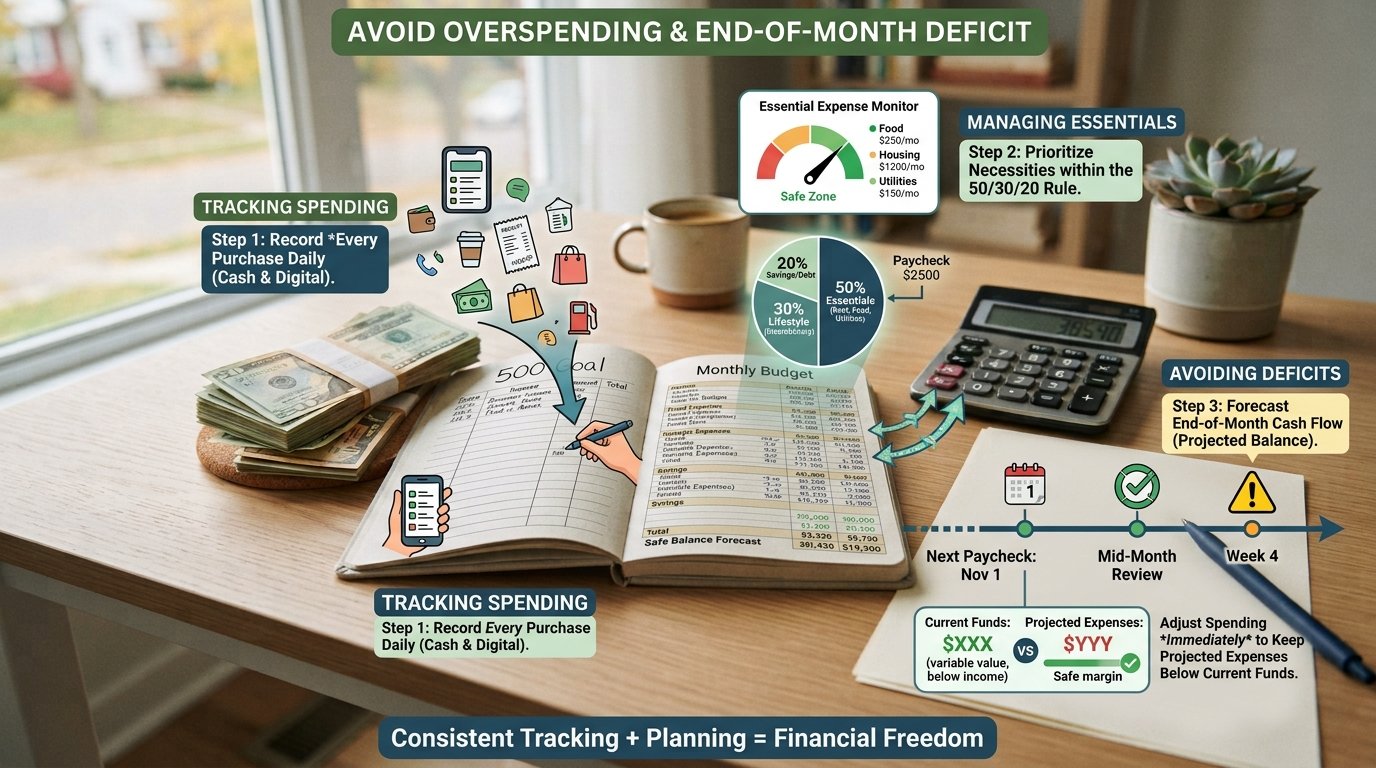
Before trying to save more money, examine where your current income goes.
You may discover that several small expenses consume a significant portion of your monthly budget. These could include frequent restaurant meals, unused subscriptions, impulse purchases, convenience-store snacks, or unnecessary delivery fees.
Review your bank and credit card statements from the previous 30 days. Identify expenses you can reduce or temporarily eliminate without affecting essential needs.
For example, consider these possible monthly savings:
| Expense adjustment | Potential monthly savings |
|---|---|
| Reduce restaurant and takeaway spending | $60 |
| Cancel unused subscriptions | $20 |
| Reduce impulse purchases | $50 |
| Plan grocery shopping more carefully | $45 |
| Reduce unnecessary shopping trips | $25 |
| Total potential savings | $200 |
These amounts are illustrative, not guaranteed. Your actual savings will depend on your current spending habits.
If you already live very frugally, you may not be able to cut $200 from your budget. In that case, focus on other options, such as selling unused items, earning extra income, or extending your savings timeline.
3. Create a 30-Day Savings Plan
A clear plan makes it easier to track your progress and identify problems before they prevent you from reaching your target.
Here is one example of how you could accumulate $500 over 30 days.
| Period | Savings target | Total saved |
|---|---|---|
| Days 1–7 | $125 | $125 |
| Days 8–14 | $125 | $250 |
| Days 15–21 | $125 | $375 |
| Days 22–30 | $125 | $500 |
This plan assumes you can save $125 during each period. If that amount is too high for your income, use a combination of reduced spending and additional earnings to make the target more manageable.
You can also divide your savings into daily targets. Saving $10 on some days and $20 on others may be more realistic than trying to save exactly $16.67 every day.
At the end of each week, check your balance and compare it with your target. If you fall behind, adjust your plan rather than abandoning it.
4. Save Money Before You Start Spending
One of the easiest ways to improve your savings habits is to set aside money as soon as you receive your paycheck.
If you wait until the end of the month to save whatever remains, you may discover that there is little or nothing left.
Instead, transfer a realistic amount into a separate savings account immediately after payday.
For example, if you receive $1,800 after taxes, you might transfer $100 or $150 into savings and then plan your remaining spending around your essential expenses.
However, do not save an amount that prevents you from paying for food, housing, utilities, transportation, or required minimum debt payments. If your budget is already stretched, start with a smaller transfer and increase it when your circumstances allow.
A separate savings account can also reduce the temptation to spend money intended for your goal.
5. Reduce Grocery Costs Without Sacrificing Nutrition
Food is an essential expense, but your grocery budget may offer opportunities to save.
Start planning meals around ingredients you already have. Then create a shopping list and compare prices before visiting the store.
You can also consider the following strategies:
- Prepare meals at home instead of buying lunch every day.
- Compare unit prices rather than choosing products based only on their package prices.
- Buy store-brand products when quality and value are comparable.
- Freeze suitable leftovers to reduce food waste.
- Plan meals around reasonably priced seasonal produce.
- Avoid shopping when hungry or without a list.
Suppose you spend $100 per week on groceries and can reduce that amount $15 without sacrificing adequate nutrition. Over four weeks, you would save approximately $60.
The goal is not to eat less than you need. It is to make your existing food budget work more efficiently.
6. Temporarily Pause Nonessential Purchases
When you have a specific 30-day savings target, a temporary spending pause can help you reach it faster.
For the next month, consider postponing purchases that are not urgent, including new clothing, decorative items, expensive gadgets, and upgrades to products that still work properly.
Before purchasing something, ask yourself three questions:
- Do I need this item right now?
- Can I use something I already own?
- Will buying it make my $500 savings goal harder to achieve?
You do not need to eliminate every enjoyable activity. Instead, set a small amount aside for affordable entertainment so that your plan remains sustainable.
A temporary spending pause works best when it focuses on purchases you can comfortably postpone rather than essential expenses.
7. Earn Extra Money to Reach Your Goal Faster
Sometimes, reducing expenses is not enough. If your income barely covers your necessities, finding additional money may be more effective than cutting your budget further.
Depending on your skills, available time, and local opportunities, you could consider:
- Selling unused electronics, furniture, or household items.
- Offering tutoring or other services based on your skills.
- Taking occasional shifts or short-term work.
- Providing pet-sitting, babysitting, or yard-care services where appropriate.
- Completing legitimate online work, such as writing, virtual assistance, or administrative tasks.
For example, suppose you identify $250 in potential savings through spending reductions. You would need another $250 to reach your target.
If you earn an additional $125 from selling unused items and another $125 from legitimate extra work, you could reach $500 without trying to force all the savings out of your regular paycheck.
Remember that additional earnings may involve expenses or taxes. Count only the money you actually retain.
Avoid opportunities that require large upfront payments, promise guaranteed profits, or ask you to share sensitive banking information with unverified parties.
8. Use a Simple Savings Tracker
Tracking your progress helps you stay accountable and gives you a clear picture of how close you are to your goal.
You can use a notebook, spreadsheet, budgeting app, or the simple tracker below.
| Week | Target | Actual savings |
|---|---|---|
| Week 1 | $125 | $_____ |
| Week 2 | $125 | $_____ |
| Week 3 | $125 | $_____ |
| Week 4 | $125 | $_____ |
| Total | $500 | $_____ |
Update your tracker whenever you transfer money into savings.
If you are behind your target, review your remaining days and identify realistic adjustments. You might reduce a nonessential expense, sell an unused item, or take on a small amount of extra work.
Avoid trying to catch up taking out a loan or skipping necessary expenses. The purpose of saving is to improve your financial position, not create another financial problem.
9. What If You Cannot Save $500 in 30 Days?
Not everyone can comfortably save $500 in one month. Your ability to save depends on your income, household responsibilities, debt payments, and cost of living.
If you cannot reach the target without compromising essential expenses, consider extending the deadline.
For example:
| Monthly savings | Time needed to save $500 |
|---|---|
| $50 | 10 months |
| $100 | 5 months |
| $125 | 4 months |
| $250 | 2 months |
| $500 | 1 month |
These calculations assume you make each contribution consistently and do not withdraw money from the fund.
Saving $50 or $100 per month is still progress. Building a consistent habit may be more valuable than setting an aggressive goal that leaves you financially stressed.
If you have high-interest debt, overdue bills, or no money available for essential expenses, review those priorities before committing to a demanding savings schedule.
10. Where Should You Keep Your $500 Savings?
Once you begin saving, consider where to keep the money.
For a short-term savings goal, an accessible bank savings account may be suitable. If you live in the United States, compare account fees, withdrawal conditions, interest rates, and applicable deposit insurance coverage.
A separate account can help you avoid accidentally spending the money on everyday purchases.
Keeping cash at home may be convenient, but it can be lost, stolen, or damaged. Investing money you expect to need within 30 days can also expose you to unnecessary risk because investment values may fall.
Choose an option that keeps your money accessible and reasonably secure.
Final Thoughts
Saving $500 in 30 days without a high income is possible for some people, but it depends on their financial circumstances. The most effective approach is to break the goal into smaller targets, review your expenses, save consistently, and look for realistic ways to increase your available money.
Start identifying how much you can genuinely save from your current income. Then combine spending reductions with additional earnings if necessary.
If $500 is too ambitious for your current situation, choose a smaller target and work toward it consistently. Your first goal is not simply to accumulate money in one month. It is to develop a savings habit that strengthens your financial security over time.
Remember: A realistic savings plan you can maintain is better than an aggressive plan that forces you to borrow money to cover basic expenses.