
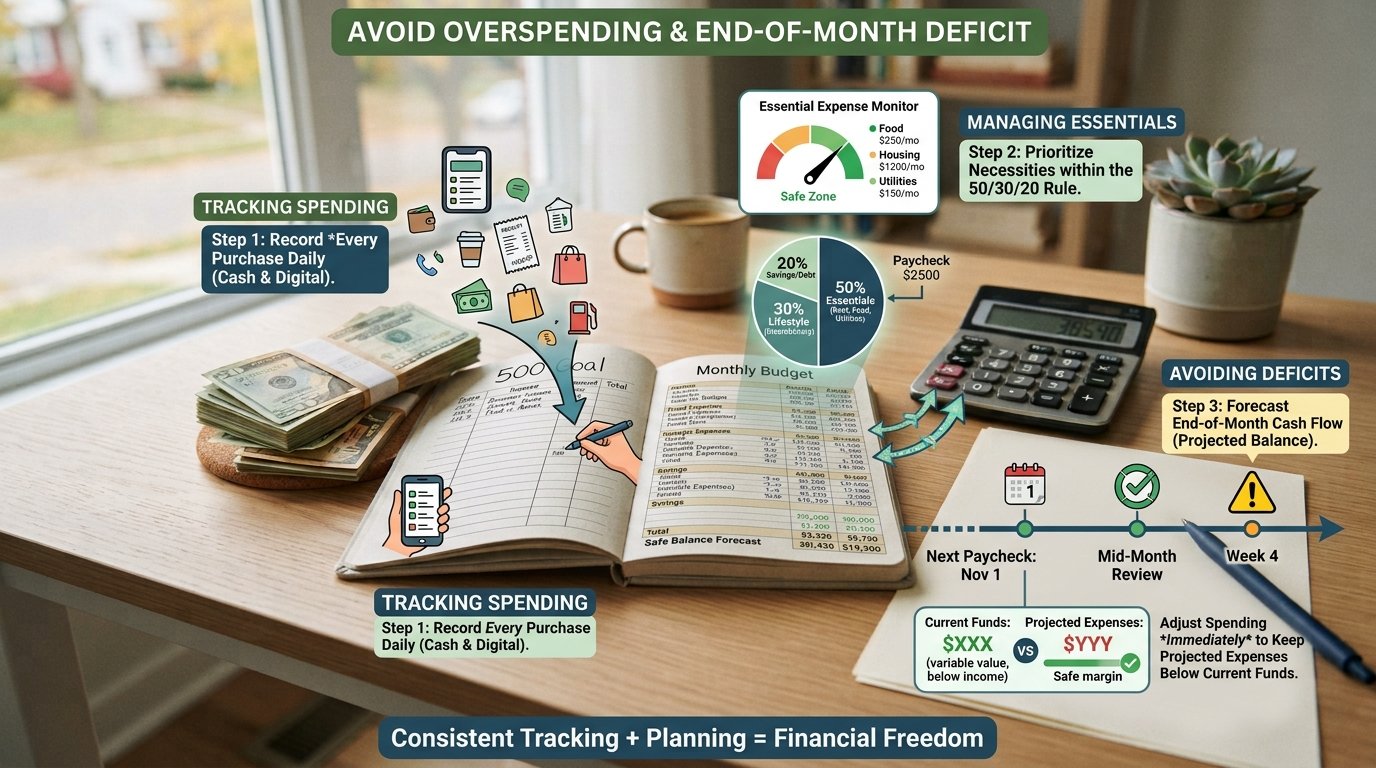















How to Save $3,000 in Six Months on an Average Income
Saving $3,000 in six months may seem difficult when you have rent, groceries, transportation, utility bills, and other expenses to manage. If your paycheck already has a purpose before it arrives, finding extra money to save can feel almost impossible.
However, building a $3,000 savings fund does not necessarily require a high-paying job or drastic lifestyle changes. With a realistic budget, consistent saving habits, and a few adjustments to your spending, you can work toward this goal even on an average income.
The key is to break the target into smaller amounts, identify expenses you can reduce, and make saving a regular part of your financial routine.
In this guide, you will learn how much to save each month, how to adjust your budget, where to find extra money, and what to do if your income is not enough to meet your target comfortably.
1. Calculate How Much You Need to Save Each Month
Before changing your spending habits, understand exactly what your goal requires.
To save $3,000 in six months, you need to set aside $500 every month.
Here is how the savings goal breaks down:
| Period | Amount to Save | Total Savings |
|---|---|---|
| Month 1 | $500 | $500 |
| Month 2 | $500 | $1,000 |
| Month 3 | $500 | $1,500 |
| Month 4 | $500 | $2,000 |
| Month 5 | $500 | $2,500 |
| Month 6 | $500 | $3,000 |
If you receive two paychecks each month, you could save $250 from each paycheck. If you are paid weekly, saving approximately $115.39 per week will get you to $3,000 in 26 weeks.
These figures assume you are starting from zero and exclude interest earned on your savings.
If $500 per month is too much for your current budget, do not abandon the goal immediately. Look for a combination of expense reductions, additional income, and a realistic adjustment to your savings schedule.
2. Review Your Current Income and Expenses
One of the biggest obstacles to saving money is not knowing where your income goes.
You may believe that you cannot save because your salary is too small, but reviewing your expenses could reveal unnecessary spending. Alternatively, you may discover that your essential expenses genuinely consume nearly all your income, meaning you need to focus on increasing your earnings rather than cutting necessities.
Start writing down your monthly take-home income and your regular expenses.
For example, someone earning $3,000 per month might have the following budget:
| Expense | Monthly Amount |
|---|---|
| Rent | $1,000 |
| Groceries | $350 |
| Transportation | $200 |
| Utilities and internet | $180 |
| Insurance and healthcare | $250 |
| Debt payments | $200 |
| Phone and subscriptions | $100 |
| Personal spending and miscellaneous expenses | $220 |
| Total expenses | $2,500 |
| Potential monthly savings | $500 |
This example shows how someone earning $3,000 monthly could save $500 if the listed expenses accurately reflect their circumstances.
Your own budget may look very different. Housing costs, family responsibilities, insurance, and debt payments can substantially affect how much you have available to save.
The important step is to identify your actual surplus rather than assuming you can save an amount that your budget cannot support.
3. Pay Yourself First When You Receive Your Income
Waiting until the end of the month to save whatever remains can make reaching your goal difficult.
A more effective approach is to transfer your planned savings shortly after receiving your paycheck.
For example, if your target is $500 per month, move that amount into a separate savings account before spending on nonessential purchases.
If you are paid twice monthly, you could automate a $250 transfer after each paycheck.
Paying yourself first helps you treat savings as a planned financial commitment rather than an optional activity.
However, do not automatically transfer money that you need for rent, food, medication, utilities, or minimum debt payments. Your savings schedule should fit your essential obligations and help you avoid new debt.
4. Reduce Your Monthly Expenses Without Sacrificing Necessities
You do not have to eliminate every enjoyable activity to save $3,000. Instead, focus on expenses that can be reduced without creating additional problems.
Review Your Subscriptions
Check your bank and credit card statements for recurring charges.
You may find streaming services, unused memberships, premium apps, or other subscriptions that you rarely use.
Canceling $25 worth of unnecessary subscriptions each month would free up $150 over six months.
Plan Your Grocery Shopping
Food is an essential expense, but unplanned shopping can increase costs.
Try planning meals before visiting the supermarket, comparing unit prices, preparing food at home more often, and using ingredients you already have.
If these changes reduce your grocery spending $40 per week, you could free up approximately $1,040 over six months.
Your actual savings will depend on your household size, local prices, and current shopping habits.
Reduce Restaurant and Takeout Spending
Eating out can be convenient, but frequent restaurant visits and delivery charges can consume a significant portion of your discretionary budget.
You do not need to stop eating out entirely. Consider setting a monthly limit and choosing which meals are worth paying extra for.
If you reduce spending $30 per week, you could save approximately $780 over six months.
Review Transportation Costs
Depending on your circumstances, you might save money combining errands, comparing public transportation with driving, carpooling, or reducing unnecessary trips.
Avoid changes that make your commute unsafe or interfere with your ability to work.
Negotiate Recurring Bills
Review your internet, mobile phone, insurance, and other recurring bills.
Compare available plans, ask providers about lower-cost options, and remove features you do not need.
Even a $20 monthly reduction across your bills would free up $120 over six months.
5. Find Ways to Increase Your Income
Cutting expenses has limits. You still need food, housing, transportation, and other essentials.
If your current income leaves little money available after necessary bills, increasing your earnings may be more effective than trying to reduce every expense.
Consider these options based on your skills, available time, and circumstances:
- Sell unused belongings: Sell clothing, electronics, furniture, or other items you no longer need.
- Take on occasional work: Consider temporary shifts, weekend work, or other opportunities compatible with your existing job.
- Offer a service: If you have useful skills, consider tutoring, writing, bookkeeping, website support, or other legitimate paid services.
- Ask for additional hours: If your employer offers overtime or additional shifts, determine whether the extra income justifies the time and costs involved.
- Monetize an existing skill: Consider whether you can earn money from a skill you already use professionally.
Be realistic about the difference between revenue and profit. If an opportunity requires transportation, equipment, platform fees, or other expenses, subtract those costs before counting the money toward your savings goal.
Avoid opportunities that require you to pay substantial upfront fees or promise guaranteed profits.
6. Combine Expense Cuts and Extra Income to Reach $3,000
You do not necessarily need to find the entire $500 monthly savings amount from your existing salary.
A combination of small spending changes and additional income may be more manageable.
Consider this illustrative monthly plan:
| Action | Monthly Amount |
|---|---|
| Reduce restaurant and takeout spending | $80 |
| Cancel unnecessary subscriptions | $25 |
| Reduce miscellaneous purchases | $45 |
| Earn additional income after expenses | $150 |
| Save from existing income | $200 |
| Total monthly savings | $500 |
Following this plan for six months would produce $3,000.
The amounts are examples, not guaranteed savings. You should adjust them to reflect your real spending and earning opportunities.
If you cannot reduce expenses or earn additional income these amounts, consider saving a smaller amount consistently and extending the deadline rather than relying on credit to cover the difference.
7. Use a Six-Month Savings Challenge
A savings challenge can make your goal easier to monitor.
You can use the following tracker to record your progress.
| Month | Target Savings | Running Total |
|---|---|---|
| Month 1 | $500 | $500 |
| Month 2 | $500 | $1,000 |
| Month 3 | $500 | $1,500 |
| Month 4 | $500 | $2,000 |
| Month 5 | $500 | $2,500 |
| Month 6 | $500 | $3,000 |
At the end of each month, compare your actual balance with your target.
If you fall behind, review your budget and determine whether you can make up the difference without neglecting essential expenses.
For example, if you save only $400 in the first month, you will be $100 behind schedule. You could save an additional $20 per month over the remaining five months if your budget allows.
If that is not practical, accept a longer timeline rather than putting yourself under unnecessary financial pressure.
8. Keep Your Savings Separate From Everyday Spending
Money intended for a specific goal can be easier to spend when it sits in the same account you use for everyday purchases.
Consider opening or using a separate savings account for your $3,000 target.
Look for an account with appropriate fees, easy access when needed, and a competitive interest rate. In the United States, an eligible deposit account at an FDIC-insured bank may offer deposit insurance subject to applicable limits and requirements.
You can also label the account according to your goal, such as “Emergency Savings,” “Car Fund,” or “Financial Security.”
If the money is intended for an emergency, prioritize accessibility over pursuing higher returns through risky investments.
Remember that interest earned may help you reach your target sooner, but your plan should not depend on investment returns to meet a short six-month deadline.
9. Avoid These Common Savings Mistakes
Even a good savings plan can fail when you overlook the factors that affect your finances.
Setting an Unrealistic Target
Saving $500 monthly may be manageable for one person and impossible for another.
Set your target based on your actual income, essential expenses, debt obligations, and family responsibilities.
Using Credit Cards to Fund Your Savings
Borrowing money to maintain a savings balance can leave you worse off, especially when the debt carries a high interest rate.
Focus on building genuine savings from available income rather than moving financial pressure from one account to another.
Ignoring Irregular Expenses
Car repairs, annual insurance premiums, school expenses, and medical bills can disrupt your plan.
Include predictable irregular expenses in your budget so you do not have to withdraw your savings whenever these bills arrive.
Cutting Essential Spending Too Aggressively
Reducing necessary food, healthcare, insurance, or other essential expenses can create greater costs later.
Focus on waste, avoidable purchases, and realistic income opportunities first.
Giving Up After One Difficult Month
Unexpected expenses can affect your progress. Missing a target once does not mean you have failed.
Review what happened, revise the remaining targets if necessary, and continue saving what you can afford.
10. What If You Cannot Save $500 a Month?
If $500 monthly is not realistic, you still have options.
You could begin saving $250 per month, which would produce $1,500 in six months. You could then increase your contributions if your income improves or certain expenses decrease.
Alternatively, you could extend the timeline.
| Monthly Savings | Time Needed to Save $3,000 |
|---|---|
| $100 | 30 months |
| $150 | 20 months |
| $200 | 15 months |
| $250 | 12 months |
| $300 | 10 months |
| $400 | 7.5 months |
| $500 | 6 months |
These calculations exclude interest and assume consistent monthly contributions.
A longer savings timeline is not a failure. Building a sustainable habit can be more valuable than setting an aggressive target that forces you to borrow money or repeatedly abandon your budget.
If your income is consistently insufficient to cover essential expenses, focus first on stabilizing your finances, exploring eligible assistance, reducing unavoidable costs where possible, and finding ways to increase dependable income.
Conclusion
Saving $3,000 in six months on an average income is possible for some households, but the outcome depends on how much money remains after essential expenses.
The target requires $500 per month, approximately $115.39 per week over 26 weeks, or $250 from each of two monthly paychecks.
Start reviewing your budget, automating affordable savings contributions, reducing avoidable expenses, and looking for realistic ways to increase your income.
Most importantly, do not measure your financial progress against someone else’s circumstances. If you cannot comfortably save $500 every month, choose a smaller amount and work toward your goal at a pace that supports your financial stability.
Consistent progress, realistic planning, and avoiding unnecessary debt can help you build savings that last beyond the next six months.
Disclaimer: This article is for educational purposes only and does not constitute individualized financial advice. Savings goals should be adjusted to your income, essential expenses, debt obligations, and personal circumstances.